Emanuele Dainotti
Borgerhout, België
Emanuele Dainotti (b. 1987 in Milano, Italy) is a visual artist working between Antwerpen (Belgium) and Milano (Italy).
Recent exhibitions and festivals include: Museum of the Moving Image (USA); Museu de Arte Moderna do Rio de
Janeiro (Brazil); Het Nieuwe Instituut (Netherlands); Haus der Kulturen der Welt (Germany); Beursschouwburg (Belgium); Rencontres Internationales Paris/Berlin (France); Tel Aviv Museum of Art (Israel); Museu Nacional de Arte
Contemporânea (Portugal); Reykjavík International Film Festival (Iceland); Hudson Valley MOCA (USA).
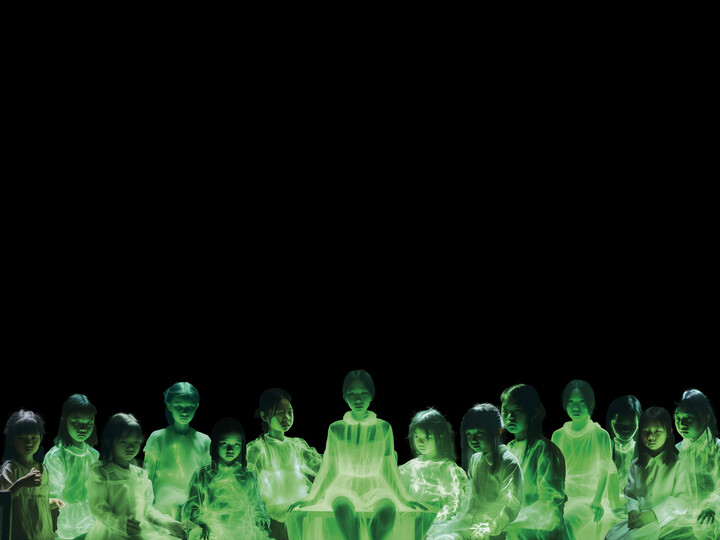
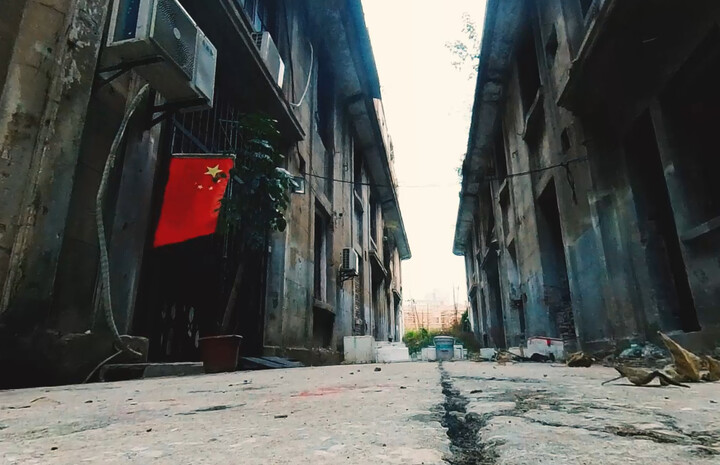
Dainotti investigates human experience in digital reality, focusing on violence normalization and reactions to shocking events. He explores AI-generated imagery created without observation, questioning authenticity and perception. Dainotti examines timeless concerns in our algorithm-dominated age, leveraging nocturnal ambiguity to blur visceral and virtual boundaries.
Emanuele Dainotti's artistic practice investigates the evolving relationship between human experience and our increasingly digital reality. He focuses on how we normalize violence and react to shocking and catastrophic events in our hyper-mediated world.
Through deep engagement with AI systems, virtual environments, and the liminal spaces where physical and digital realms intersect, Dainotti explores concepts of impossibility, imperceptibility, and inconceivability. He creates plausible yet impossible visual and narrative structures, leveraging the malleability of digital media.
Central to Dainotti's work is an ongoing examination of timeless human concerns such as fear, death, and the passage of time, as they manifest in our algorithm-dominated age. Themes of loop, time, and finitude recur in his practice, reflecting the cyclical nature of digital and virtual experience and information flow.
The nature of AI-generated imagery is a key focus in Dainotti's practice, particularly the paradox of creation without observation. He investigates how AI, devoid of physical lenses or sensors, generates images solely through data analysis, a translation of a translation.
Dainotti's work often leverages the ambiguity and temporal distortion of nocturnal realms to create tension between primal human experiences and technology. By blurring the boundaries between the visceral and the virtual, he invites viewers to reconsider traditional notions of authenticity and embodied experience in our digitally immersed world.