Jördis Weilandt (Elm Charm)
Canada
Elm Charm is a translation of the German word “Ulmenzauber”, which I chose to describe my artistic intention to enchant people by striking tunes in their bodies, minds and souls less and less frequently heard in our busy modern world. Born under the influence of Elm trees, I share with my birth tree companion a deep commitment to social justice, community care and long-term visioning.
My practice is rooted in long-term engagement with decolonisation, historical memory, and ethical arrival. Growing up on a Baltic island, where water structured daily life, labour, and cosmologies, I became attuned early to how belief systems, governance, and historical change reshape human relationships to place and resources. This embodied understanding of water and its relational significance now threads through my exploration of sites across the globe, connecting land-locked places with port cities, water towns, and imperial infrastructures in ways that illuminate colonial, trade, and cultural entanglements.
My East German background shapes how I see patterns of colonialism and rapid urbanisation. Having studied and worked in big cities like Leipzig, Manchester, Ust-Kamenogorsk, Petersburg, Beijing, Suzhou, Hong Kong, Ottawa, and now Calgary, I've witnessed how Western colonial expansion and industrial development sever people from land. I'm particularly drawn to documenting the shift from rural to urban life, the moment when generations of ecological knowledge fade, when nature blindness becomes normalised, when concrete replaces soil memory.
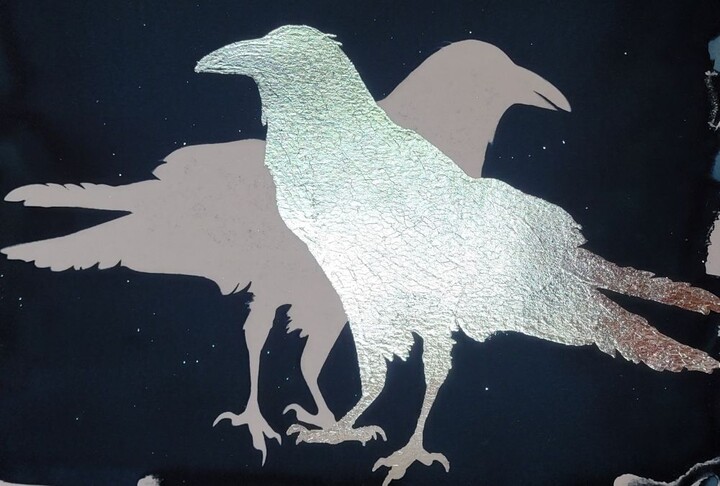
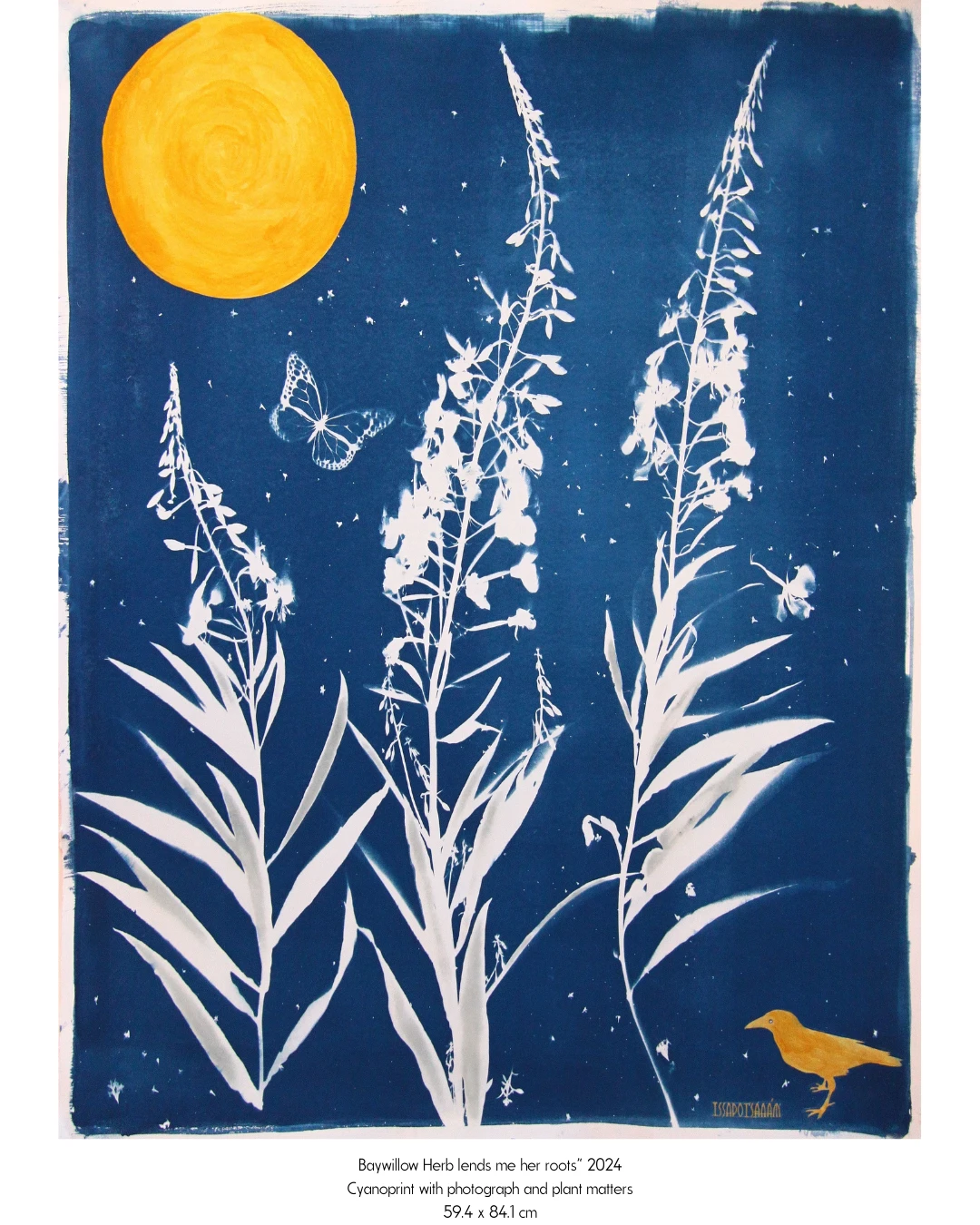
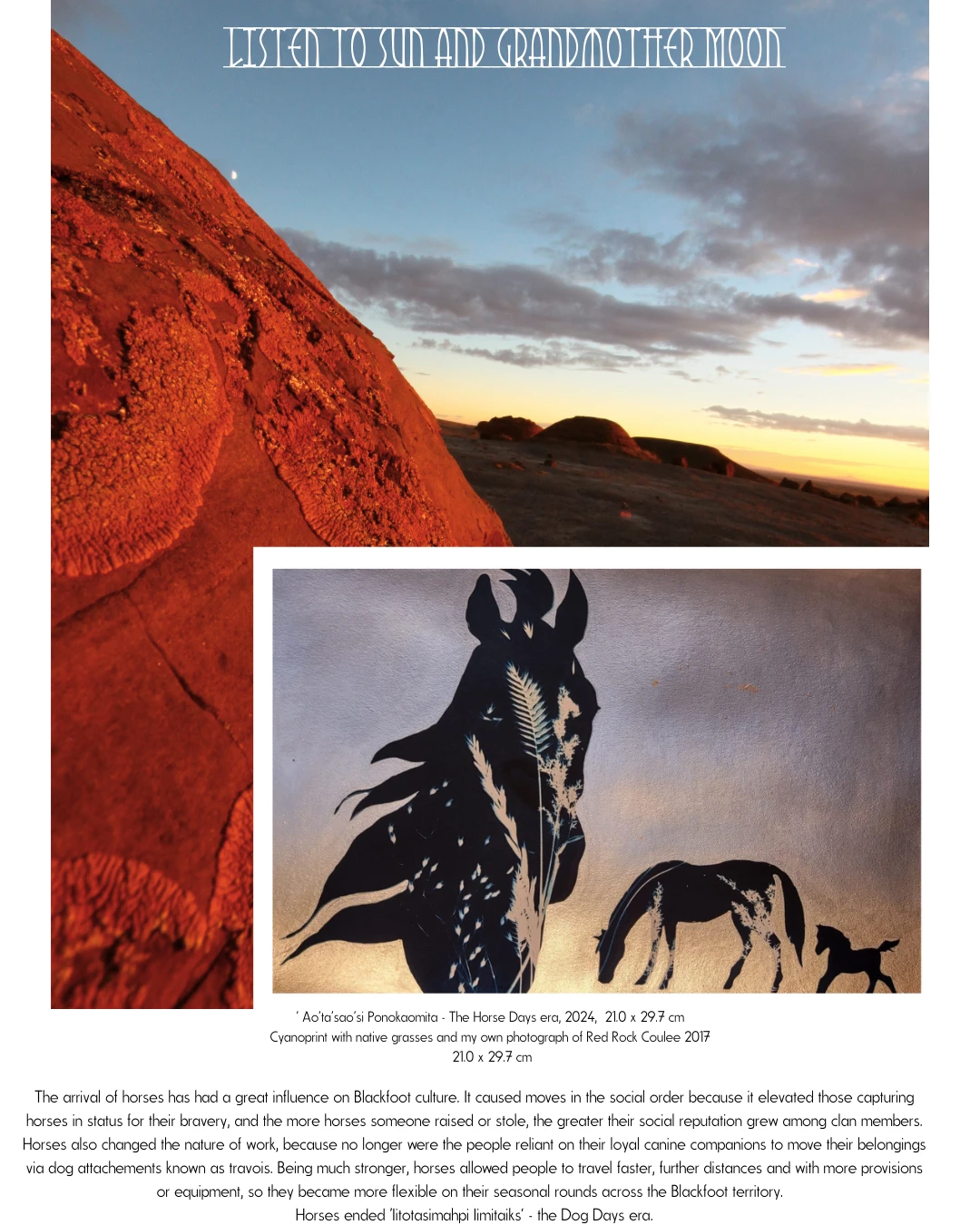
My process is inherently experimental, playful and slow. I seek ways to combine media that don't traditionally belong together. Recently, cyanotypes have become substrates for complex layering of media, ceramic vessels come to hold botanical prints and animal representations, gold leaf illuminates both flat surfaces and three-dimensional forms. When I am not exploring printmaking techniques, I'm finding flow with pottery and beading because they require slowness, repetition, attention: the same qualities needed for the relational work of decolonisation. These are practices that resist the speed of urban life, that insist on handwork and materiality. Verspieltheit 'playfulness' guides my work as much as deep listening to the proceedings around me, so I can find depth in the themes of social and environmental justice.
My cyanotypes combine photographs I've taken across continents with elements gathered from local landscapes. I don't simply press plants onto light-sensitive paper: I paint, I bead, I build ceramic elements. I gild to create complex surfaces that mirror the complexity of what I'm trying to hold. Gold leaf appears throughout my work for its connection to the life-giving sun, but also for its historic role in colonial extraction and trade. The same material that represents divine light and vitality also marks routes of conquest and dispossession. This duality interests me.
Beading has taught me about patience and the accumulation of small gestures toward beauty. Pottery has taught me about working with what the earth offers, about transformation through life elements of water, clay, fire. When I incorporate beadwork onto paper, or press botanical matter into wet clay before firing, I'm asking: How do these methods speak to each other? What happens when techniques associated with different cultural traditions meet on the same surface?
Each piece documents a particular kind of learning: the disorientation of recognising my complicity, the grief of witnessing ecosystems collapse under development pressures, the tentative practice of asking rather than taking. I work with plant-based and environmentally conscious materials because these methods require attention to what is already present. The cyanotype process itself utilises multiple life elements: sun, water, botanical matter, and thus teaches me about interconnectedness in ways my German education did not.
As a white woman moving through spaces marked by multiple layers of colonialism (Russian in Kazakhstan, British in Hong Kong and Canada, Western throughout China), I'm interested in what happens when someone trained in extractive ways of seeing begins to perceive differently. What does it mean to root on stolen land? What does accountability look like in artistic practice? How do we remember our animal bodies, our dependence on the web of life, when cities and systems are designed to make us forget?