Querida Buelens
Gent, België
Querida Buelens (2003)
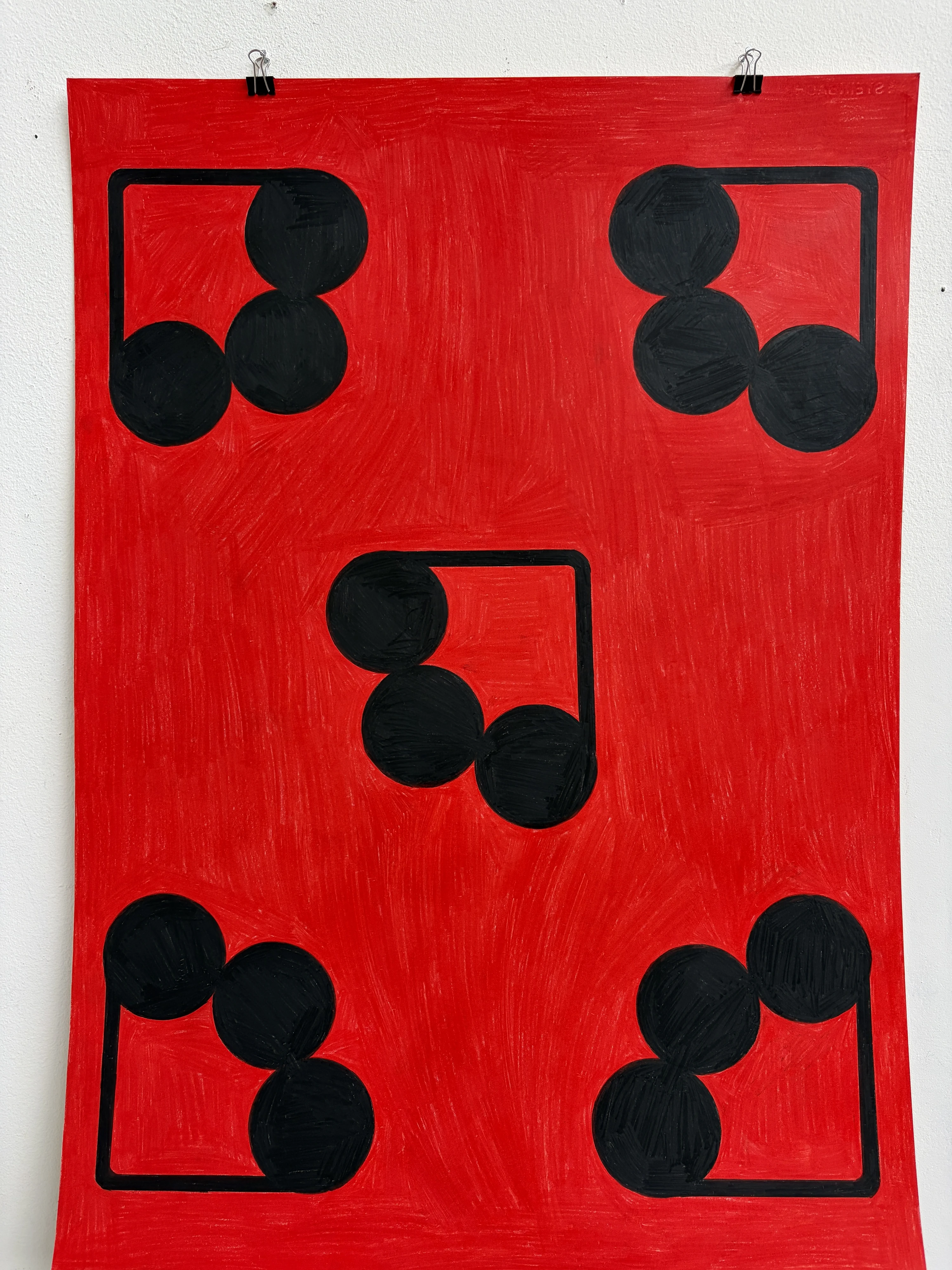
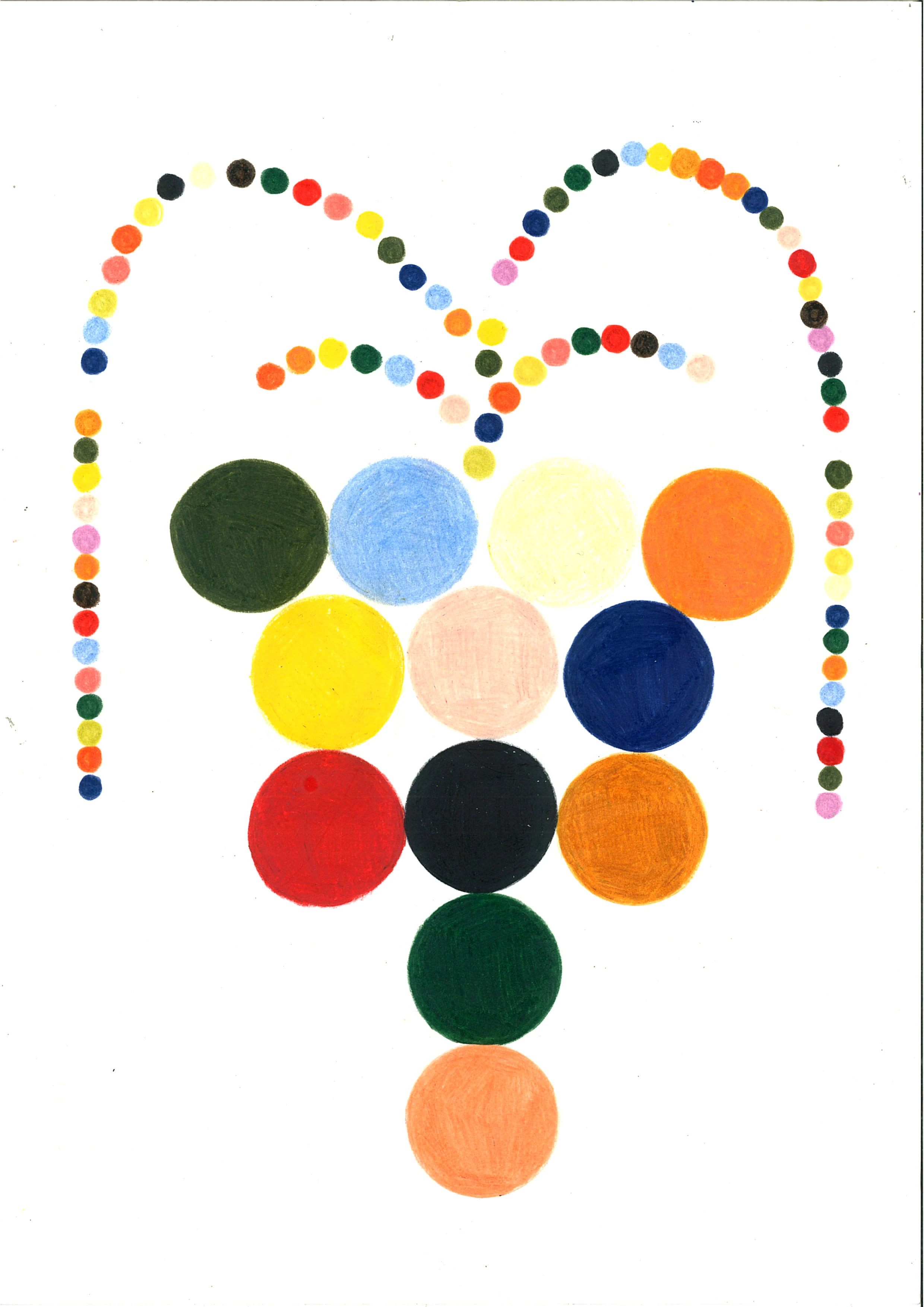
Querida Buelens' drawing practice is rooted in an ongoing investigation of form, line, and colour, with the circle repeatedly returning as an unstable point of departure. This form is never fully fixed; it shifts, distorts, and assumes different roles within a fictional visual language. At times, the circle appears as a recognizable symbol, while at others it functions as a structural element within the composition. As a result, its meaning remains open, fluid, and constantly in motion.
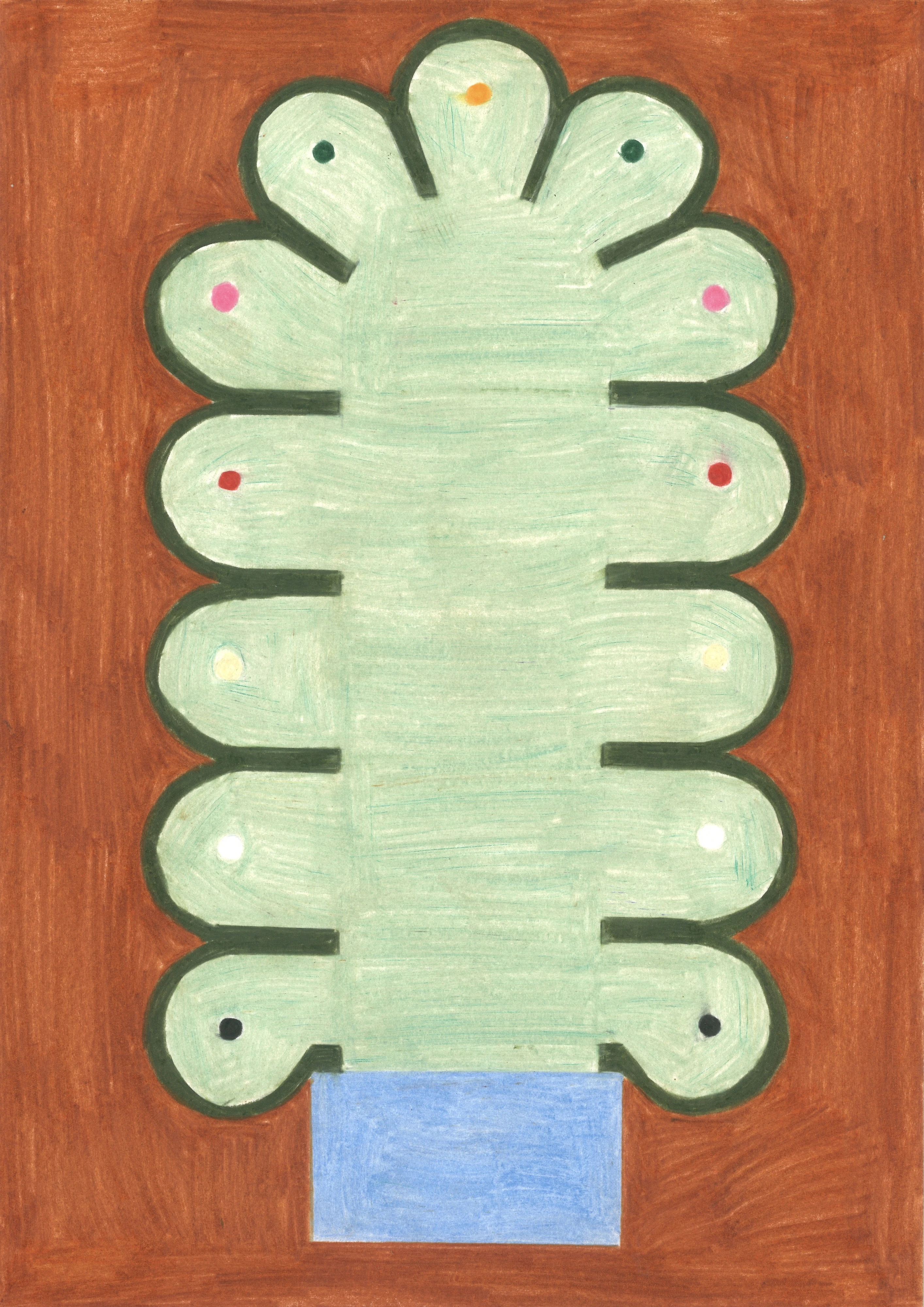
At the core of the practice lies the interplay between form, line, and colour. Drawing serves as the fundamental point of departure. Particular attention is given to the visibility of the making process: how a line emerges through pressure, repetition, interruption, and movement. The act of drawing itself remains present within the work, with each line carrying traces of its own formation. Rather than filling a surface, images are constructed through rhythms, overlaps, and successive gestures. Every mark contributes to the tension of the composition and makes the process tangible and visible.
Colour does not function as a supplement but as an active and autonomous force within the image. It can reinforce, disrupt, or even replace form, shaping how a work is perceived and experienced. Through contrasts, repetition, and unexpected colour combinations, a shifting dynamic emerges that keeps the image in motion. Colour and form do not operate independently but continuously influence one another.
Within the drawings, each coloured pencil is assigned a specific function. Different brands possess distinct material qualities: some are soft and creamy, while others retain a sharper and more visible line. These characteristics are deliberately employed for particular elements within the work, such as structure, layering, rhythm, or overlap. The material itself is therefore not merely a tool but an active component that influences how a form develops and how the image unfolds.
The practice is informed by the working methods of artists such as Hilma af Klint, Kasper Bosmans, Agnes Martin, Lily van der Stokker, and Mark Rothko. The influence does not lie in the direct appropriation of imagery, but rather in their approaches to colour, composition, and repetition, and in the ways form can carry emotional, symbolic, or spatial significance. As in Buelens' own practice, meaning is never entirely fixed but emerges through the continuous interaction between material, gesture, and image.