The Age of the Octopus
Artist’s Statement
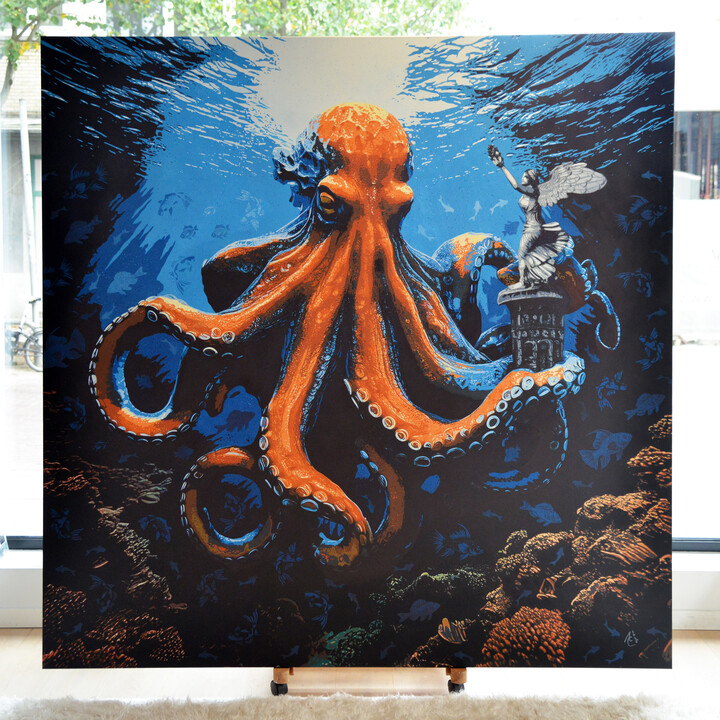
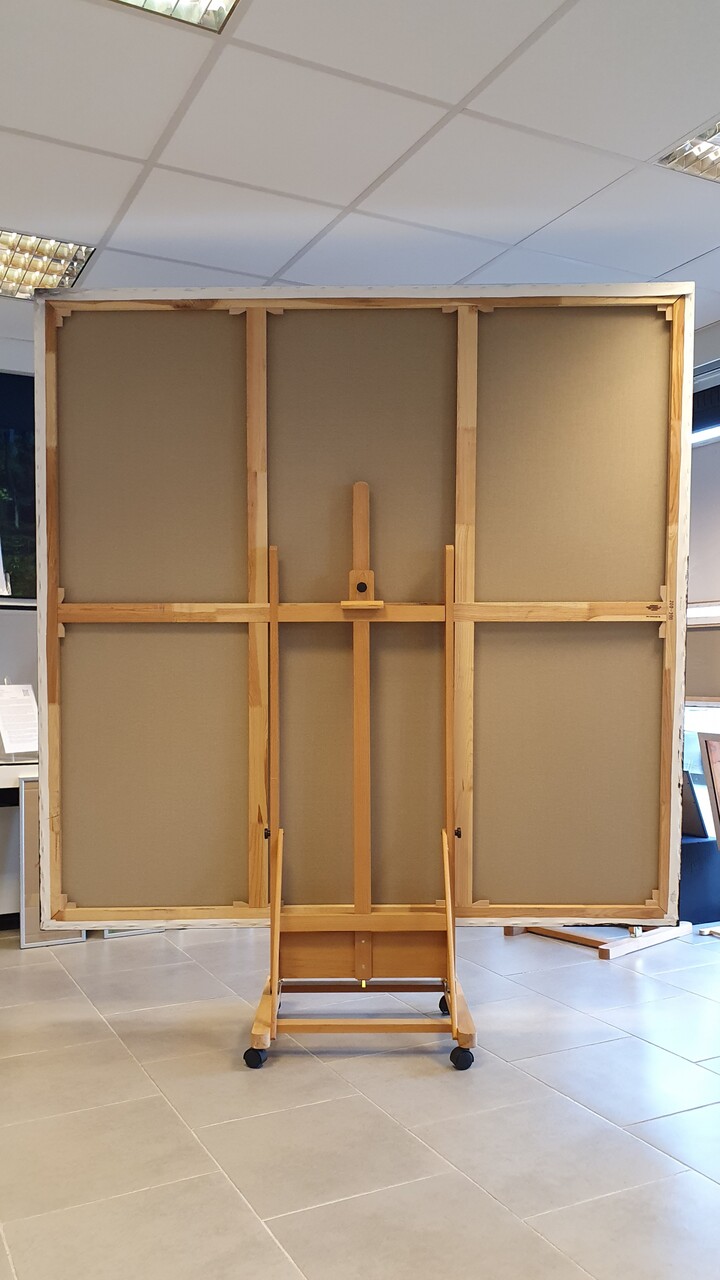
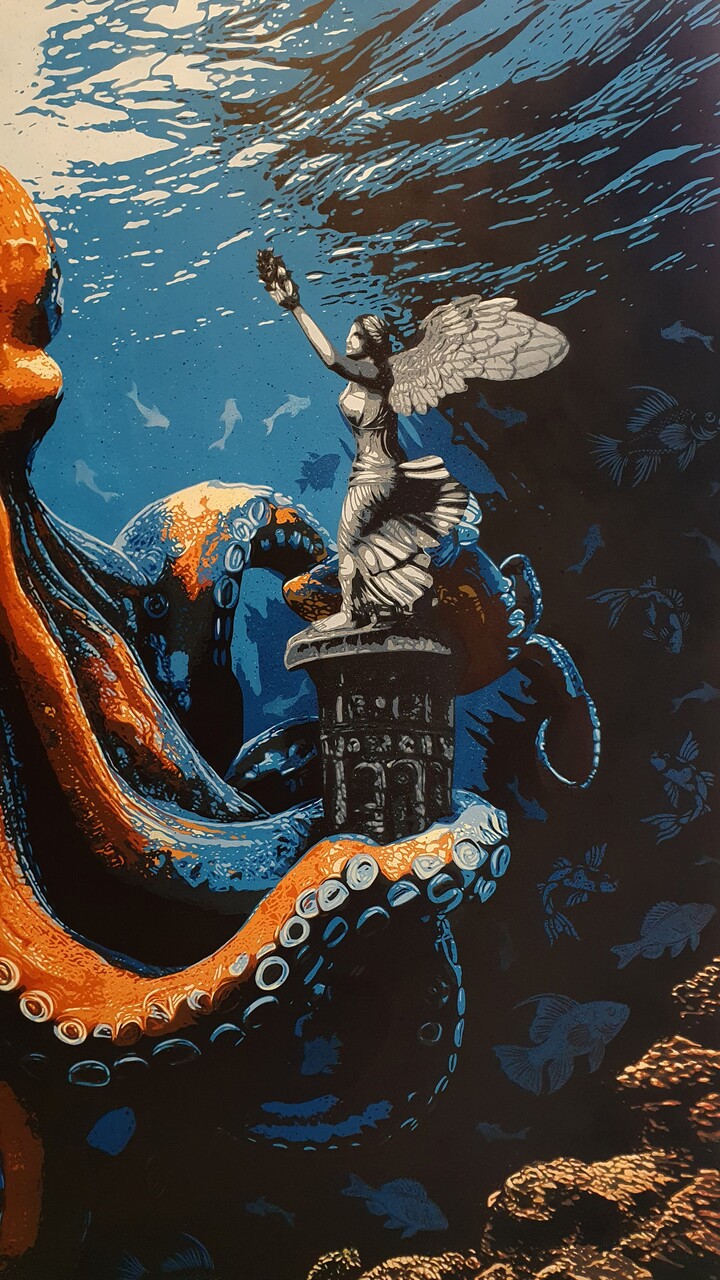
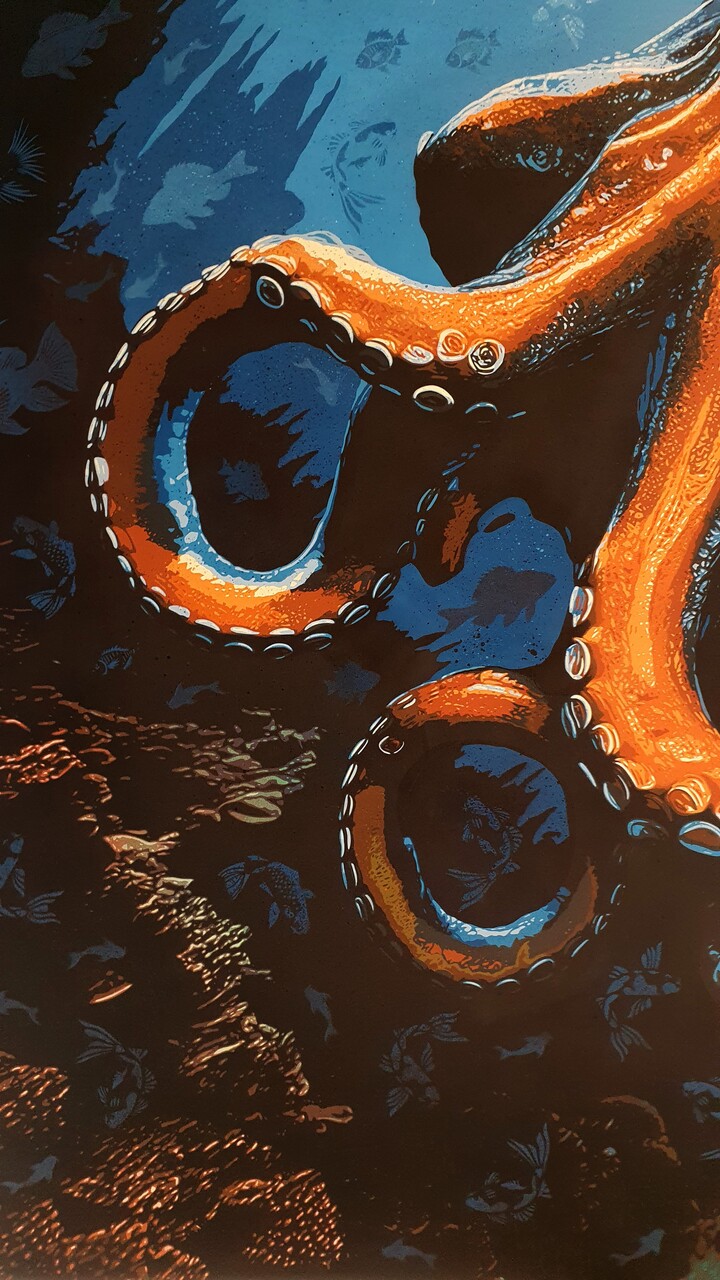
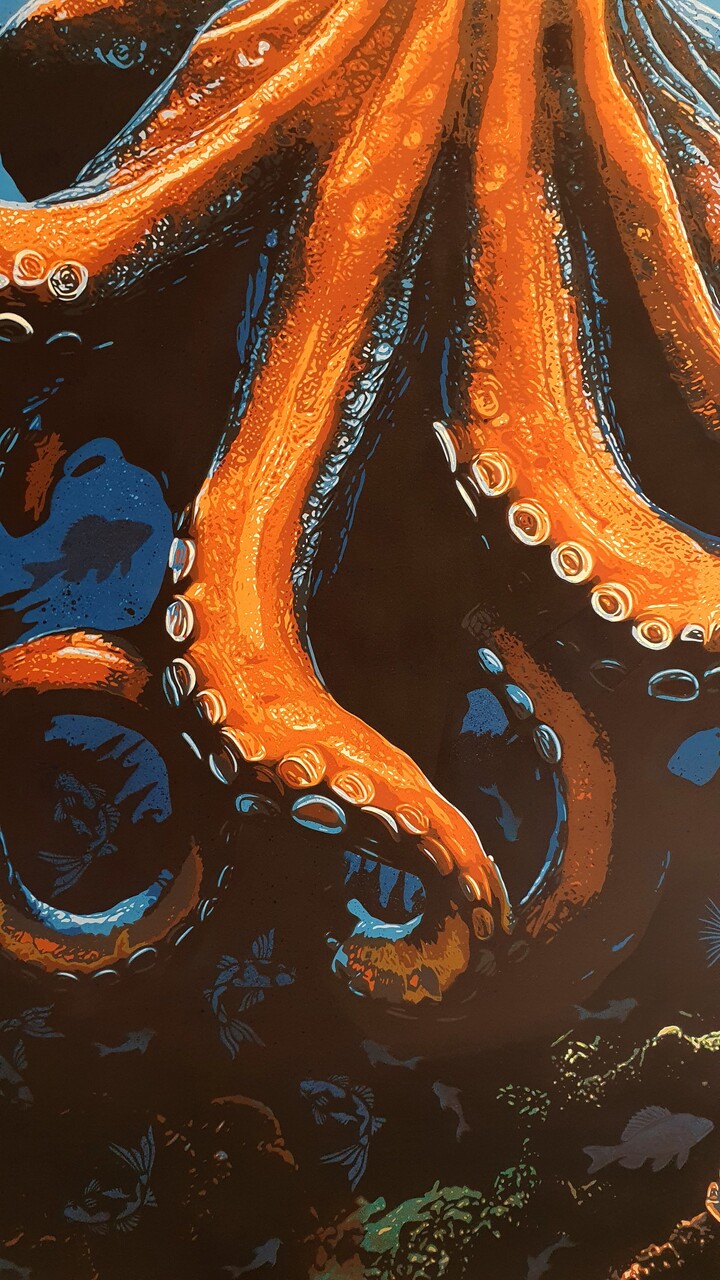
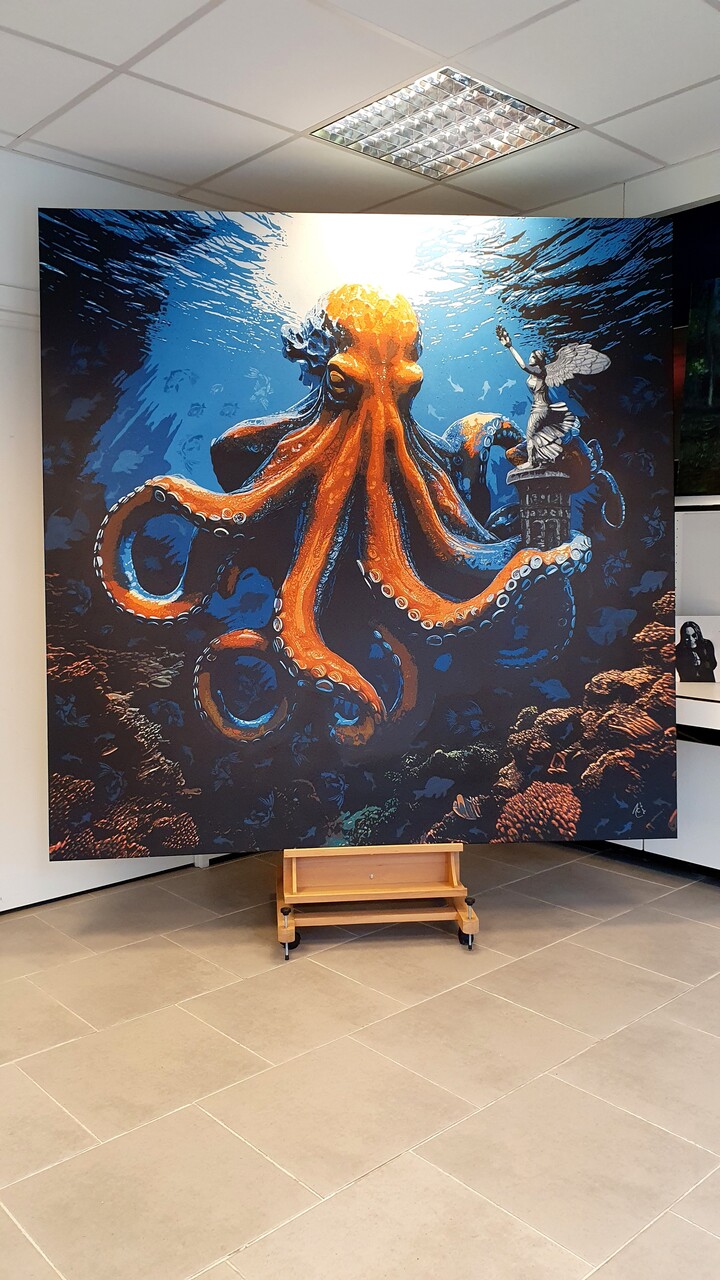
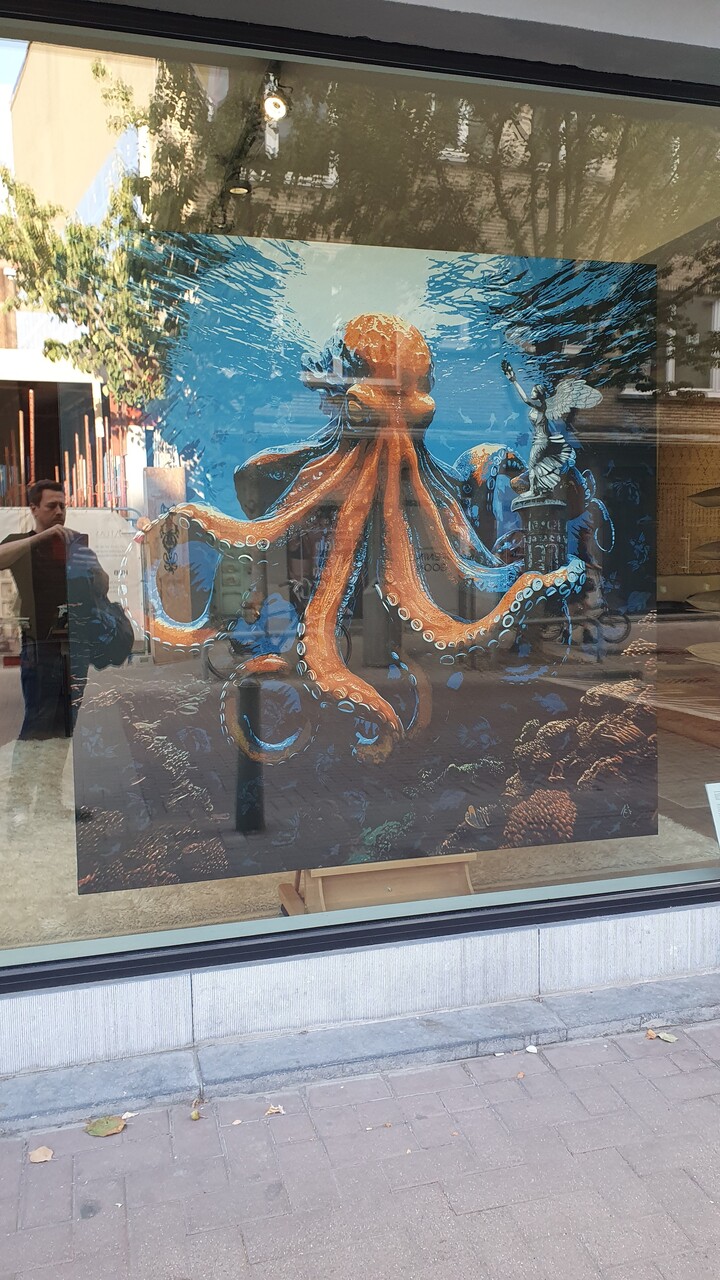
The Age of the Octopus is a large-scale stencil graffiti painting created using meticulously hand-cut stencil layers and acrylic spray-paint on canvas. Spanning two meters by two meters, the work confronts the viewer with an image of both quiet majesty and unsettling dominance: a colossal orange octopus seated calmly on the ocean floor, cradling the ancient Greek statue Winged Victory of Samothrace.
The octopus, often associated with intelligence, adaptability, and the enigmatic deep, emerges here as a symbol of nature's endurance and quiet domination. Yet, the composition holds a subtle twist - the statue does not merely rest in the creature’s grasp. The octopus appears to be crowned by the statue itself, as if Victory is bestowing her final laurel not upon a human hero, but upon nature’s ultimate survivor, its tentacles wrapping not in aggression but in a quiet reclamation of what humanity once held sacred. It is a quiet coronation marking a shift in power: a new ruler of the deep, crowned not by conquest, but by survival.
The Winged Victory of Samothrace - an iconic remnant of human triumph and war - has become a relic of a vanished civilization, diminutive in comparison. Its former glory now dwarfed and preserved like an artifact in the sea’s museum. In this imagined post-human future, she drifts not as a ruin but as a messenger, declaring nature’s rightful ascension. Now, in the silent kingdom of coral and currents, the octopus reigns. There is a duality at play: the octopus as a destroyer, yet also a guardian. It evokes the sublime, where beauty and terror coexist.
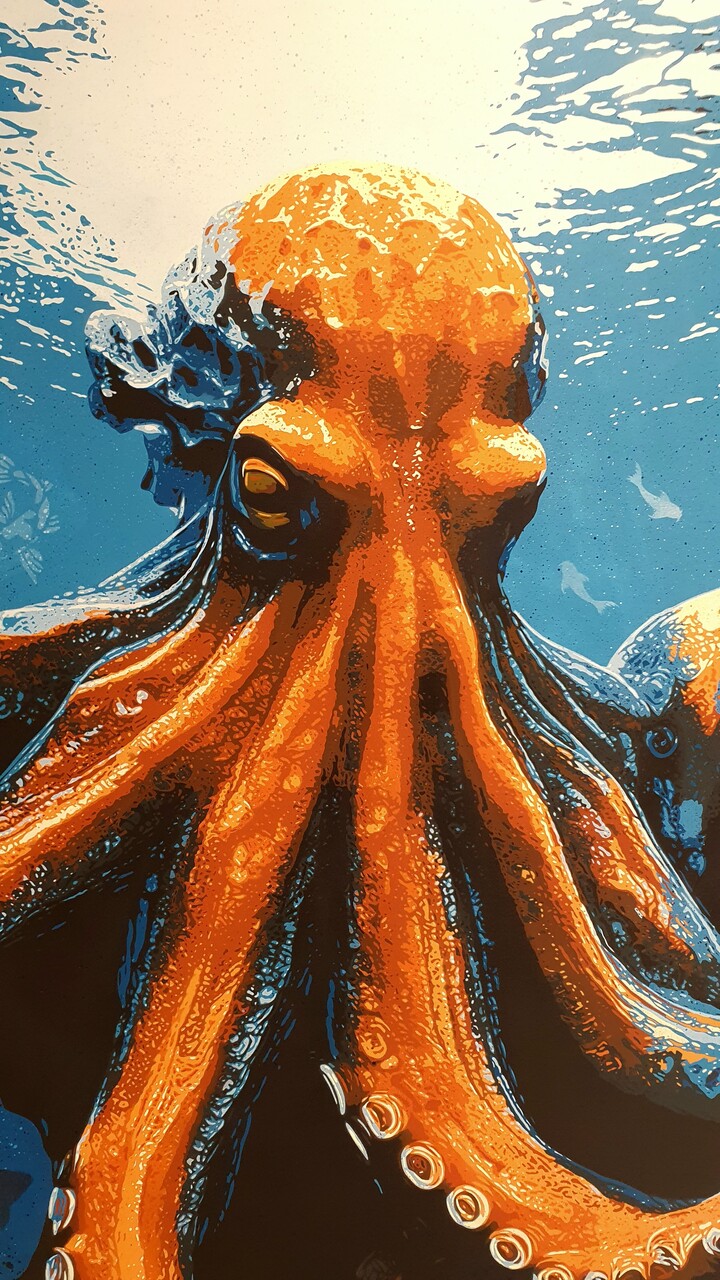
With every detail meticulously hand-cut into layers of stencil, the process itself mirrors the layered complexity of both natural ecosystems and ancient civilizations - fragile, intricate, and easily undone. This street art technique - commonly associated with fleeting, urban environments - takes on new weight when used to render such a lasting theme: impermanence, regeneration, and the ultimate sovereignty of the natural world.
- Technique: Created through the painstaking street art method of layered stencil graffiti, each shape and contour was hand-carved out of paper. This slow, deliberate method contrasts the perceived immediacy of spray-paint and graffiti, emphasizing craftsmanship in a traditionally ephemeral form.
- Symbolism: The octopus represents nature's resilience and intelligence. The Winged Victory of Samothrace, a Hellenistic sculpture of the goddess Nike, stands in for the height of human achievement—now rendered a fossil of lost civilization.
- Message: As sea levels rise and ecological systems evolve in our absence, the ocean becomes not only the cradle of life but its heir. This piece invites reflection on the impermanence of power, legacy, and the myth of human dominion.